


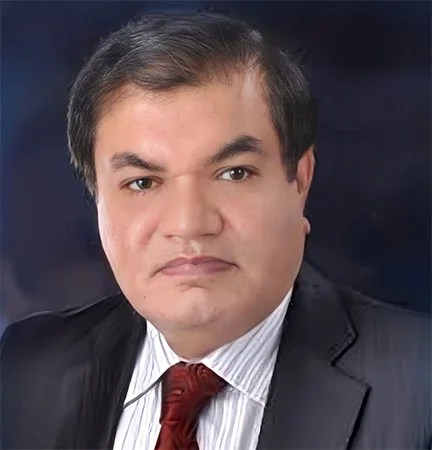
 President of the Pakistan Businessmen and Intellectuals Forum (PBIF) and All Karachi Industrial Alliance, Chairman of the National Business Group Pakistan, Chairman of the FPCCI Policy Advisory Board, and former Provincial IT Minister, Mian Zahid Hussain, has expressed his profound appreciation for the fuel relief program initiated by Prime Minister Mian Muhammad Shehbaz Sharif for low-income citizens. However, he warned that with fuel prices for industrial and commercial users still at extremely high levels, the industrial and transport sectors face a crisis of survival, posing severe threats to national exports and overall economic stability.
Mian Zahid Hussain said that the Prime Minister’s targeted fuel relief program for motorcycles, rickshaws, and cars up to 800cc is a highly commendable and timely initiative. By shielding the most vulnerable segments of society, daily wage earners, and low-income households from the burden of inflation, the government has demonstrated remarkable political resolve. He stated that in the difficult economic circumstances arising from the US-Iran war, such protective measures are absolutely essential to maintain social harmony and prevent millions from falling below the poverty line. The business community fully supports the government’s efforts to provide relief to the public, who have been severely affected by continuous waves of inflation and rising costs.
Mian Zahid Hussain said that while relief for the low income is praiseworthy, the productive sectors of the economy are crushed under the weight of extraordinarily high energy prices. Currently, the price of petrol has exceeded Rs. 389 per litre, while high-speed diesel is at a peak of Rs. 424 per litre, making the logistics and supply chain systems extremely expensive. He pointed out that diesel is the lifeline for the goods transport sector and the agricultural supply chain. These high fuel prices have multiplied domestic freight costs, thereby increasing the cost of raw materials for factories and causing the final prices of consumer goods to skyrocket. This situation is gradually paralyzing the manufacturing sector, which is already burdened by heavy taxes and the highest electricity tariffs in the region.
Mian Zahid Hussain said that higher fuel, electricity, and gas prices in Pakistan compared to other countries in the region are rapidly eroding the competitiveness of Pakistani exports in the international market. It is becoming increasingly difficult for exporters to fulfill international orders at competitive rates compared to regional rivals like Bangladesh, India, and Vietnam, who are supporting their industrial sectors through cheap energy and lower logistics costs. Furthermore, global geopolitical and military crises, such as supply chain disruptions in the Middle East and instability in the Strait of Hormuz and Bab-el-Mandeb, are driving up international crude oil prices on a daily basis. If immediate relief is not provided to protect Pakistan’s industrial sector from these international shocks, the recent modest progress in export recovery could be completely lost.
Mian Zahid Hussain urged the government and the Ministry of Finance to formulate a relief strategy specifically tailored for export industries and essential supply chains. He recommended introducing targeted fuel subsidies for commercial goods transporters and industries, which would directly reduce industrial costs. Additionally, he emphasized that accelerating the $6 billion refinery upgradation projects and swiftly transitioning towards the Competitive Trading Bilateral Contract Market (CTBCM) for cheaper electricity are the only viable and long-term solutions. He stated that saving the industrial sector in difficult times is equivalent to saving the national economy, and providing balanced relief is key to sustainable development.