



UBL executes largest-ever interest rate swap of Rs75bn with Jazz

United Bank Limited (UBL) has successfully executed a PKR 75 billion Interest Rate Swap (IRS) with Jazz, Pakistan’s leading digital operator, marking the largest interest rate swap ever concluded in the country. The transaction enables Jazz to hedge interest rate risk on its long-term local currency debt, enhancing cash-flow predictability and strengthening its financial risk management framework. The deal further reinforces UBL’s pioneering role in developing Pakistan’s derivatives and hedging markets, setting benchmarks for scale, structure and execution, while supporting the evolution of sophisticated risk-management practices among corporates.
UBL acted as the sole counterparty and structuring bank for the transaction, underscoring its expertise in delivering complex treasury and hedging solutions tailored to client needs. The successful execution reflects improved market stability and an enabling macroeconomic environment that supports large-scale financial transactions.
The signing ceremony for the deal was held at a local hotel in Karachi. The Chief Guest was Mr. Jameel Ahmad, Governor, State Bank of Pakistan. Mr. Muhammad Jawaid Iqbal, President & CEO United Bank Limited, Mr. Aamir Ibrahim, CEO Jazz, Mr. Burak Ozer, Group Chief Financial Officer of VEON Ltd, and Mr. Muneer Kamal, CEO and General Secretary of Pakistan Banks’ Association also spoke on the occasion. The ceremony was attended by many senior executives from the State Bank and leading industrialists and CEOs from Pakistan’s corporate sector.
In his address to the audience, Muhammad Jawaid Iqbal, President & CEO United Bank Limited, mentioned that the landmark IRS transaction will pave the way for the development of the interest rate swap and derivative market in Pakistan. He added that the deal signaled UBL’s readiness to pursue more ambitious and high-impact opportunities in the future, and expected that other banks will also now come forward to undertake large derivative transactions.
Mr. Aamir Ibrahim, CEO Jazz, said the transaction reflected the company’s disciplined approach to financial management and long-term value creation. He noted that proactively managing interest rate exposure would strengthen cash-flow certainty while allowing continued investment in Pakistan’s digital infrastructure.
UBL operates one of the largest banking networks in Pakistan with over 2,000 branches serving over 10 million customers nationwide. The bank is also the first Pakistani bank to surpass PKR 1,000 billion in market capitalization, emphasizing strong investor confidence in the Bank’s fundamentals and strategy.
JS Global expands PSX investor base with 26,000 new accounts

Pakistan’s capital markets witnessed notable growth in 2025, with JS Global Capital Limited playing a significant role in expanding the investor base. The brokerage added more than 26,000 new equity accounts during the year, accounting for nearly a quarter (24.55%) of the 107,061 new investors who joined the Pakistan Stock Exchange (PSX).
This increase follows JS Global’s successful financial literacy and investor awareness initiatives, which aimed to make investing accessible and understandable for a wider audience. The programs focused on engaging young professionals, household women, and Gen-Z investors, presenting the stock market as a practical avenue for long-term financial planning rather than a complex or risky endeavor.
The growth also reflects improving market conditions and positive investor sentiment toward the PSX, signaling a gradual broadening of Pakistan’s investment culture.
Muhammad Khalil Ullah Usmani, CEO of JS Global Capital Limited, noted, “The response from new investors shows growing confidence in the stock market and highlights JS Global’s role in strengthening the PSX. Our efforts to promote informed, goal-based investing, along with our robust digital platform and enhanced customer experience, were pivotal in enabling this mass onboarding. Building on these strengths, we remain committed to introducing further enhancements for our investors.”
The year saw the PSX’s overall investor base increase by roughly 30%, from 357,419 to 464,480 accounts, with JS Global contributing nearly a quarter of that growth. This trend indicates deeper market participation and a strengthening culture of shareholding in Pakistan, with brokerage firms like JS Global playing a central role in promoting financial literacy, investor education, and inclusive access to capital markets.
IMC achieves global recognition with Toyota zero defect award

In a significant achievement for Pakistan’s automotive and manufacturing sector, Indus Motor Company (IMC) has once again been awarded “Zero Defect” status by Toyota Motor Corporation (TMC), placing Pakistan among Toyota’s top-performing production facilities globally. The recognition follows Toyota’s stringent Shipping Quality Audit (SQA), a global benchmark assessing adherence to the company’s exacting quality standards across all affiliates.
To mark the achievement, a senior delegation from Toyota Motor Asia (TMA), Singapore, visited IMC’s manufacturing plant. The delegation was led by Mr. Masahiko Maeda, CEO, Toyota Motor Asia, and included Mr. Hiroshi Nasu and Mr. Shunsuke Shibayama (Executive Vice Presidents), Mr. Ryuzo Miwa (Vice President), Mr. Hiroki Kogiso (Project General Manager), and Mr. Shinya Terashima (Project Manager).
During the visit, Toyota leadership praised IMC’s consistent alignment with Toyota’s global manufacturing and quality standards, which are uniformly applied worldwide. Zero Defect status is a rare distinction and reflects IMC’s world-class production systems, disciplined processes, and highly skilled workforce.
Industry observers regard this milestone as a strong endorsement of Pakistan’s manufacturing capability, highlighting the country’s capacity to compete at the highest international level. The achievement underscores a culture of precision, consistency, and continuous improvement rooted in the Toyota Production System and the Kaizen philosophy.
Reflecting on the achievement, Mr. Mohammed Ali R. Habib, Chairman Indus Motor Company, noted that as global value chains evolve, it is imperative for countries like Pakistan to demonstrate reliability, consistency, and competitiveness—attributes that this recognition firmly reinforces.
Mr. Habib emphasized that such accomplishments strengthen customer confidence, elevate Pakistan’s industrial reputation, and highlight the strategic importance of nurturing advanced manufacturing capabilities for national economic growth.
IMC CEO Mr. Ali Asghar Jamali described it as a moment of national and organizational pride, calling it a global validation of Pakistan’s manufacturing excellence and IMC’s commitment to the Toyota Way. He emphasized that the distinction reflects the discipline, technical expertise, and dedication of IMC’s people, with every vehicle meeting Toyota’s highest global benchmark.
Aligned with Toyota’s focus on people development, IMC continues to invest in advanced capability-building initiatives, including the Inter Company Transfer (ICT) Program and Toyota’s Global Skill Training (GST) initiative in Japan. To date, 490 IMC employees have received training at Toyota plants in Japan, Thailand and Singapore, with more planned.
As Pakistan strengthens its industrial base, IMC’s Zero Defect achievement stands as a compelling example of the country’s ability to meet the most demanding global quality standards.
Pakistan Cables, PEC launch graduate engineer training

Pakistan Cables Ltd. has signed a Memorandum of Understanding (MoU) with the Pakistan Engineering Council (PEC) for the Graduate Engineer Trainee (GET) Placement Programme on 9th January 2026, at PC Hotel.

GET is an initiative designed to bridge the gap between academic learning and professional practice by placing fresh engineering graduates with industry partners for five months of structured training. As part of this programme, Pakistan Cables will intake 15 Graduate Engineer Trainees, to be shortlisted by PEC from within Sindh in line with the Company’s operational requirements and location.
This reflects the Company’s’ continued commitment to supporting STEAM education and youth empowerment in Pakistan.
Bilawal Praises Thar Foundation for Social Revolution
PPP Chairperson Bilawal Bhutto Zardari acknowledged Thar Foundation’s initiative for community development during the inauguration ceremony of the first phase of the Tharparkar Institute of Engineering, Science and Technology.”This area didn’t have basic health units, dispensaries and hospitals, but now, with the government’s investment, we have laid a health network in Tharparkar. While coming to Thar, I saw Thar Foundation, which receives a share from the profit generated from coal to ensure that social work continues and to run a hospital,” said PPP Chairperson Bilawal Bhutto-Zardari.
He continued, “Tharparkar’s progress is essential for Pakistan’s progress, just the way the progress of all four provinces is essential for the entire Pakistan”.
Thar Foundation has provided free of cost, critical services to more than 400,000 patients at its 7 medical facilities since inception. Besides health, the Foundation is transforming local communities by educating over 5,000 students (40% girls) at 33 schools, supplying over 3 million gallons of clean water monthly through 33 RO plants, and has achieved 100% solarization of Thar Block II and nearby villages.
EU Carbon Tax: Green Grid Certification essential to save exports, say Mian Zahid Hussain
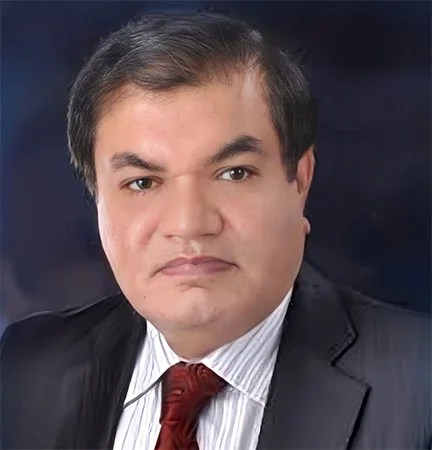
Mian Zahid Hussain, President Pakistan Businessmen and Intellectuals Forum & All Karachi Industrial Alliance, Chairman National Business Group Pakistan, Chairman Policy Advisory Board FPCCI, and Former Provincial Minister Information Technology, said on January 16 that the survival of Pakistan’s export sector hinges on two critical policy shifts: the immediate introduction of “Green Grid” certification for industrial estates to bypass European carbon taxes, and the strategic utilization of the newly deregulated sugar sector to launch a bio-energy export revolution.
Speaking to the business community, he warned that while the EU’s Carbon Border Adjustment Mechanism (CBAM) is technically in a transitional phase for textiles, European buyers have already begun demanding “Carbon Passports” from Pakistani suppliers. He stated that because Pakistan’s national grid relies heavily on fossil fuels, local exporters are being assigned high carbon-intensity scores that make their products uncompetitive compared to rivals in Vietnam and Bangladesh.
Mian Zahid Hussain proposed a practical solution, urging the Ministry of Energy to designate specific industrial feeders in Karachi, Faisalabad, and Sialkot as “Green Energy Zones.” He explained that by legally certifying that the electricity supplied to these specific lines is sourced from renewable hydel, wind, or solar projects, the government can allow thousands of SMEs to claim near-zero emissions for their production without needing to install expensive individual solar plants. He emphasized that without this “Green Grid” certification, the country’s textile sector faces an existential threat, as the upcoming carbon levies will effectively neutralize the advantages of GSP Plus status.
The veteran business leader also warmly welcomed the government’s decision to fully deregulate the sugar sector by June 2026, terming it a long-overdue reform that could unlock a new industrial frontier. He highlighted that beyond the production of sweetener, this deregulation clears the path for a massive expansion in the production of fuel-grade ethanol. He noted that with the removal of export quotas and price controls, the industry can now utilize its surplus molasses and sugarcane bagasse to generate over $1 billion in annual ethanol exports, while also contributing to the national energy mix through bio-power generation.
Mian Zahid Hussain advised the government to view sugar deregulation not just as an agricultural policy, but as an industrial energy strategy. He pointed out that countries like Brazil and India have successfully used deregulated sugar sectors to fuel their transport industries and reduce oil import bills, a model Pakistan must now replicate. He concluded that if the government can provide “Green Grid” certification to protect traditional textile exports and simultaneously facilitate the ethanol industry to capture new markets, the country can successfully pivot from a stabilization mode to a high-growth export trajectory in 2026.
Zong and PITB to enhance citizen access at E-Khidmat Centers

Zong, Pakistan’s leading information services and technology innovation company, has signed a Memorandum of Understanding (MoU) with the Punjab Information Technology Board (PITB) to enhance citizen access to telecom services through 15 divisional and district e-Khidmat Maraakaz across Punjab Province. The initiative is designed to improve service outreach, Streamline customer interactions and complement PITB’s mission of delivering integrated public services through technology enabled platforms.

The Zong Customer Facilitation Desks will offer essential walk-in support services, including SIM issuance and replacement, basic account assistance, recharge and bill payment guidance, and information on Zong’s products and packages along with related customer services. These desks are established to assist citizens who require in-person support or may face limitations in using digital channels, reflecting a structured and inclusive approach to public service delivery. Citizens can visit the official website https://ekhidmat.punjab.gov.pk/ for complete information on all PITB e-Khidmat centers across Punjab.
Faheem Khan Durrani, Executive Director Sales & Distribution, Zong, commented:
“Our partnership with PITB reflects a shared commitment to enhancing citizen-focused service delivery through effective public–private collaboration. By establishing Customer Facilitation Desks at e-Khidmat Maraakaz, we aim to provide seamless and responsive support for customers while advancing the Government of Punjab’s Digital Pakistan agenda.”
Both organizations will coordinate closely to ensure smooth implementation, monitoring, and operational management of service provision, reinforcing the Government of Punjab’s wider digital initiatives and the national vision of citizen-focused technological advancement.
Google launches new AI frontier with Personal Intelligence in Gemini

For years, digital planning has felt like a chore. Whether it’s organizing a family vacation or finding a specific memory, people have had to act as a “human router”—constantly switching between email tabs, photo galleries, and maps to get things done.
Google is now making that easier as it recently announced a major update to Gemini with the launch of Personal Intelligence, a new way for AI to help you manage your daily life by organizing and processing the various information across your favorite Google apps.
Unlike traditional AI that only knows what it finds on the internet, Personal Intelligence understands people’s own personal worlds by analyzing the apps they rely on most. By securely linking with apps like Gmail, Google Photos, and YouTube, Gemini becomes a specialized assistant tailored to your specific needs.
Many things are made easier with Personal Intelligence—take the stress of travel planning as an example. Instead of searching through dozens of emails for flight confirmations and scrolling through years of photos to remember a favorite restaurant, you can simply ask Gemini for help. It can see your travel dates in Gmail, learn your “vibe” by looking at your favorite nature photography or food snaps in Google Photos, and even creates a cohesive, one-of-a-kind itinerary that matches your specific style and schedule.
In addition to the ultimate AI convenience, Google has built Personal Intelligence with a privacy-first mindset. The feature is entirely optional and off by default. People have total control over which apps they choose to link and they can delete chat history anytime! Whether you want to connect just your Gmail or include your YouTube interests to find better workout videos, the choice remains in the user’s hands at all times.
This feature is still in beta and has started rolling out to eligible Google AI Pro and AI Ultra subscribers in the U.S. Google plans to expand to more countries, languages and the free tier soon!
Zahid Hussain urges urgent policy shift as imf lowers growth outlook
Mian Zahid Hussain, President Pakistan Businessmen and Intellectuals Forum & All Karachi Industrial Alliance, Chairman National Business Group Pakistan, Chairman Policy Advisory Board FPCCI, and Former Provincial Minister Information Technology, expressed serious concern over the International Monetary Fund’s (IMF) decision to downwardly revise Pakistan’s GDP growth forecast from 3.6% to 3.2% on Tuesday (Jan 21). He warned that this deceleration, coupled with a widening current account deficit, signals an urgent need for the government to move beyond “breathing space” and implement radical structural reforms to protect the country’s industrial foundation.
“The IMF’s revised projection is a wake-up call,” said Mian Zahid Hussain. “While the Pakistan Stock Exchange is hitting record highs above 188,500 points on the back of speculative interest rate cuts, the ‘real economy’ on the ground is struggling. A 3.2% growth rate is insufficient to absorb the youth entering the workforce or to alleviate the poverty currently gripping the middle and lower classes.”
The veteran business leader highlighted the alarming shift in the country’s external account, noting that the $1.17 billion current account deficit recorded in the first half of FY 2025-26 is a sharp and dangerous reversal from last year’s surplus. “This reversal proves that our economic recovery remains fragile and heavily dependent on imports. Without a significant surge in high-value exports, we are simply walking back into a debt trap,” he added.
Mian Zahid Hussain expressed concerns, noting the closure of many large spinning units due to uncompetitive energy tariffs. He stated that the PKR 130 billion cross subsidy, which makes electricity expensive for industries, should be withdrawn immediately, saying that the industry cannot thrive on short-term incentives that are countered by high taxes.
Mian Zahid Hussain also commented on the government’s efforts to renegotiate terms with the IMF for the $7 billion Extended Fund Facility (EFF). He urged the economic team to prioritize “industrial growth” in these negotiations rather than just fiscal tightening. “We need a budget for 2026-27 that is pro-industry, not just pro-revenue. If the government fails to bring the policy rate down to a single digit immediately, even the 3.2% growth target may become an impossible dream.”
Mian Zahid Hussain concluded by welcoming the potential for Chinese investment in smart irrigation and the diplomatic outreach from the U.S. regarding the “Board of Peace,” but emphasized that Pakistan’s global standing is inextricably linked to its economic sovereignty. “A strong Pakistan is an economically viable Pakistan. We must fix our house first by supporting our manufacturers and exporters.”
Pharma bureau urges sops for medical representatives’ visits to Punjab public hospitals
Pharma Bureau, the representative body of multinational pharmaceutical companies operating in Pakistan urges the Punjab government to establish clear standard operating procedures (SOPs) governing visits by medical representatives (MRs) to public hospitals.
“We are concerned about the provincial government’s blanket ban on MR visits, which departs from international best practice,” said a Pharma Bureau spokesperson, Executive Director, Ayesha T. Haq. “Appropriate, transparent SOPs would enable MRs to continue providing doctors with essential, evidence based information about medicines and adverse effects, information that benefits patient care.”
The call follows a letter from the Pharma Bureau to Punjab’s Minister for Specialized Healthcare and Medical Education, Khawaja Salman Rafique, submitted after three medical sales representatives were recently detained during a hospital visit.
Pharma Bureau recommends that the Punjab government:
- Develop clear SOPs for MR access and interactions in public hospitals in consultation with the health department, hospital administrators, medical associations and pharmaceutical companies.
- Define allowable locations, visiting hours, documentation and verification procedures and rules for educational materials and samples.
- Establish transparent monitoring and disciplinary processes to prevent commercial influence on prescribing while preserving legitimate scientific exchange.
“Pharmaceutical firms supply medicines to government hospitals and provide employment for hundreds of MRs,” Ms. Haq added. “A blanket ban risks job losses and reduced tax revenue and may hinder timely scientific communication that supports safe prescribing.”
The Punjab Health Department has ordered medical superintendents to bar MRs from public hospitals and take legal or disciplinary action for violations, saying the move aims to prevent undue influence on prescribing and protect patients from commercial conflicts.
Pharma Bureau believes SOPs designed to prevent undue influence while permitting regulated scientific interactions would better balance patient protection with timely information flow. The Bureau urges the provincial government to involve industry stakeholders in drafting practical, enforceable guidelines and offered to engage collaboratively on model SOPs.
HBL Zarai Launches “Khushiyan Da Mela” Bringing Agriculture, Banking, Community & Connectivity Together for Rural Pakistan

HBL Zarai Services Limited, a wholly owned subsidiary of HBL, has launched a landmark rural engagement initiative titled “Khushiyan Da Mela” (Festival of Happiness), a first of its kind agriculture focused community festival designed exclusively for the farming heartland of Pakistan. The inaugural event was held in Chak 305-EB, Burewala, a complete rural setting, reflecting HBL Zarai’s commitment to engaging farming communities in the environments where they live and work.

Conceived as a family friendly rural festival, Khushiyan Da Mela goes beyond a conventional agri exhibition. It offers farmers and their families a joyous and inclusive experience while introducing them to integrated agriculture solutions, modern farming practices, and financial inclusion through trusted agri and banking partners. The initiative reflects HBL Zarai’s commitment to meeting farmers where they are, both geographically and culturally.
The mela brings together leading agriculture, financial & telecom institutions including Supreme Wanda, Azeem Fertilizer, Bayer, Corteva, Syngenta, FMC, Barkat Fertilizers, Guard, Bank AL Habib, Bank of Punjab, HBL Konnect, and Zong, creating a one stop ecosystem where farmers can access agri inputs, advisory, banking services and connectivity in one joyous gathering.
A major highlight of the event was a specially produced pre-recorded stage play, featuring renowned performers Sohail Ahmed and Honey Albela. The play used humor and relatable rural storytelling to convey powerful messages around modern agriculture, informed decision making, and improved livelihoods, striking a strong emotional connection with the audience.
The first Khushiyan Da Mela was inaugurated by the farmers of the host community themselves, symbolizing ownership and participation from the very people the initiative is designed to serve. Thousands from the surrounding farming areas attended the event, turning it into a true celebration of rural life, learning, and togetherness.
The Chief Executive Officer of HBL Zarai Services Limited was present at the event and shared the following message:
“Khushiyan Da Mela is a reflection of our belief that meaningful impact begins with respect, inclusion, and understanding of the farming community. At HBL Zarai, we are building an integrated agriculture services platform that combines agronomy, inputs, mechanization, market access, and financial inclusion. By bringing our partners together in a community setting, we are not just offering services, we are building trust and long-term relationships with farmers and their families.”
Building on the success of the inaugural event, HBL Zarai plans to host 20 large melas and 40 mini melas during the year across the regions it serves, significantly expanding outreach and farmer engagement.
Sharing his remarks at the event, Mohammad Omer, Chief Marketing Officer of HBL Zarai, said: “Khushiyan Da Mela is about meeting farmers on their own ground, in a way that feels inclusive and respectful. By combining agriculture, banking, and storytelling in a festive setting, we are making agri services and financial inclusion more accessible and meaningful for farming families.”
HBL Zarai’s agriculture services are designed to support farmers across the full value chain, from advisory and quality inputs to financial access and market linkages. Community driven initiatives such as Khushiyan Da Mela play a vital role in creating awareness, encouraging adoption of better practices, and fostering a sense of shared progress. By blending education with entertainment and services with celebration, HBL Zarai continues to strengthen its role as a trusted partner in the sustainable development of Pakistan’s farming communities.