


Wafi Energy reports robust growth, Pkr 3.54bn profit

The Board of Directors of Wafi Energy Pakistan Limited (WEPL) announced the company’s financial results for the year ended December 31, 2025. The company reported a profit after tax of PKR 3.54 billion, an increase of 7.5% compared with the same period last year. This marks Wafi Energy’s first year in Pakistan, shaped by strong performance, disciplined expansion, and strategic investment.
In 2025, Wafi Energy expanded its Shell retail network, adding 35 new Shell retail sites, including a second eco-friendly Shell site built with recycled plastic, bringing the Shell retail network to over 680 sites nationwide. The Lubricants business continued strong performance across both consumer and industrial segments. Wafi Energy and OEM partnerships were strengthened, and the mining portfolio expanded, alongside growth in indirect and process oil segments.
Commenting on the results, Zubair Shaikh, Chief Executive Officer, said, “We delivered a strong business performance in 2025 and importantly, we did so while investing to grow. Our focus through the year was clear – to expand in priority growth areas, establish Wafi Energy in Pakistan and strengthen the Shell customer experience. In 2026, our ambition is to accelerate growth, build shareholder value and continue investing in the energy future for Pakistan.”
In 2026, Wafi Energy Pakistan Limited remains focused on operational excellence, growth, and generating shareholder value. Last year, the Board in-principle authorized management to explore potential investment and acquisition opportunities in the oil marketing sector. The company is also advancing its investment strategy by planning a Dubai-based subsidiary to expand commercial activities and strengthen its regional presence. This strategic move underscores Wafi Energy’s commitment to sustainable growth and expanding its footprint.
Remittances: the quiet joy powering Pakistan’s progress
To understand Pakistan’s economic reality, one does not need complicated graphs. One only needs to see the smile on a mother’s face when a message arrives: “Money sent.” In that simple moment lies relief, dignity and hope. Remittances are not just foreign exchange figures; they are lifelines connecting overseas workers to families and to the national exchequer.”Pakistan continues to receive billions of dollars every year from its hardworking citizens abroad. These inflows strengthen foreign exchange reserves, support the rupee and ease pressure on the balance of payments. At a time when import bills are heavy and debt repayments demanding, remittances provide stability without adding new loans. They are earned income, honestly sent home.”But beyond macroeconomics, the real story is human. Overseas Pakistanis fund school fees, medical treatment, house construction and small businesses. In many towns and villages, local markets survive because of money earned in Riyadh, Dubai, Doha or London. This circulation creates economic activity at home while improving the living standards of families.”Therefore, opening more legal and structured opportunities for Pakistanis to work abroad should be a national priority. Skilled migration in healthcare, technology, construction and engineering can increase incomes and reduce vulnerability. At the same time, recruitment systems must be transparent so workers are not burdened by heavy upfront costs.”Equally important is making it easier and cheaper to send money home through formal banking channels. Digital platforms, lower transaction costs and exchange rate stability encourage confidence.
When funds move through official systems, both families and the national exchequer benefit.”Remittances bring joy to households and strength to the economy. With better policies and skill development, they can become not just a safety net, but a bridge towards sustainable progress for Pakistan and its people.
Mega Motor Company signs financing deal with British International Investment for Pakistan’s first large-scale nev plant

Mega Motor Company (Private) Limited (MMC), official partner of BYD in Pakistan, has signed a financing agreement with British International Investment (BII), the UK’s development finance institution and impact investor, to support the establishment of Pakistan’s first purpose-built large-scale NEV manufacturing plant.
Under the agreement, BII will provide long-term foreign currency financing, accounting for 25 percent of the total project cost, to be invested in MMC’s state-of-the-art, purpose-built NEV manufacturing facility. Scheduled to go live in H2 2026, the plant will deploy cutting-edge automation and world-class manufacturing systems, benchmarked against leading global automotive standards.
The agreement is among the earliest green energy–linked funding arrangements for Pakistan’s automotive manufacturing sector and is expected to play a pivotal role in expanding access to affordable clean transport.
Pakistan has the third worst air quality globally, and the transport sector alone contributes over 43 percent of our GHG emissions, according to Pakistan Institute of Development Economics. Research shows even a 30 percent shift to NEVs could cut total emissions by nearly 20 percent. Clean mobility is one of the fastest and most practical routes to cut carbon emissions, reduce oil imports and boost local green industry.
The project is expected to create over 1,100 jobs, advance sustainable industrialisation, and deliver significant climate benefits, including avoiding an estimated 165,000 tonnes of CO2 emissions by 2034.
Aly Khan, CEO of Mega Motor Company (MMC), said, “Pakistan stands at a critical inflection point, where clean mobility is integral to achieving the country’s long-term economic and energy objectives. Through this collaboration, MMC is leading that transition laying the foundations of a globally competitive NEV ecosystem for the country. This greenfield investment will not only accelerate NEV adoption, but also help shape Pakistan’s automotive future by building a resilient value chain that creates jobs, enables knowledge and technology transfer, and strengthens long-term industrial capability.”
Stephen Priestley, Managing Director and Head of Financial Services Group, and Industries, Technology and Services, at British International Investment said, “This investment aligns with our priority on supporting sustainable industrial transformation and climate action. It also accelerates Pakistan’s energy transition by enabling job creation in a growing green sector and strengthening its emerging clean transport ecosystem.”
In parallel, MMC, with support from British International Investment, is implementing robust environmental, social, and governance (ESG) practices, including strengthened labour standards, occupational health and safety management, stakeholder engagement, and responsible supply-chain systems.
SSGC appoints Mr. Muhammad Amin Rajput as Managing Director/ Chief Executive Officer

SSGC’s Board of Directors has appointed Mr. Muhammad Amin Rajput as the Company’s Managing Director/ Chief Executive Officer on contract basis for a period of three years, with immediate effect.
Prior to becoming the Managing Director, Mr. Rajput led SSGC as its Acting Managing Director. He has also served SSGC as its Chief Financial Officer and Chief Internal Auditor.
Mr. Rajput is an accomplished professional with over 30 years of diversified experience in the areas of finance, audit and management in the oil and gas, energy, manufacturing and automobile sectors.
Before joining SSGC, Mr. Rajput served with K-Electric as its Chief Internal Auditor as well as Zahid Tractor, Saudi Arabia (Volvo & Caterpillar) in various Finance and Audit positions.
Mr. Rajput is a Fellow Chartered Accountant (FCA) and Certified Internal Auditor. He completed his Chartered Accountancy from KPMG, Pakistan Office.

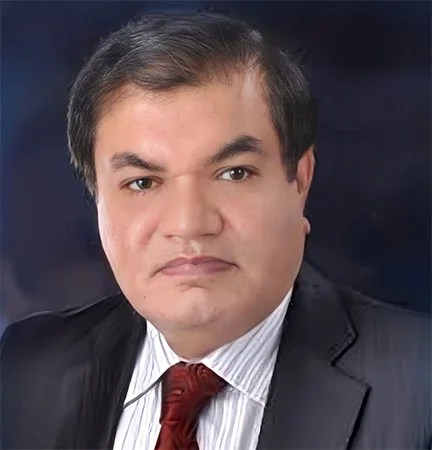
Mian Zahid Hussain, President Pakistan Businessmen and Intellectuals Forum & All Karachi Industrial Alliance, Chairman National Business Group Pakistan, Chairman Policy Advisory Board FPCCI, and Former Provincial Minister Information Technology, stated today that while the domestic economy is showing signs of a genuine turnaround, the ongoing IMF review mission must not result in further energy tariff hikes or tax burdens that could push the struggling export sector into a total collapse.
Speaking to the business community, Mian Zahid Hussain acknowledged the positive macroeconomic indicators, noting that Large-Scale Manufacturing (LSM) has posted a solid 5% growth in the first half of FY26. He highlighted the remarkable 67.2% surge in automobile production and an 11.6% rebound in cement, signaling strong domestic demand. Furthermore, he commended the Pakistan Stock Exchange for its landmark transition to the T+1 settlement cycle, a modernization that aligns the capital market with global standards despite the recent index correction from its 191,000 peak to the 166,000 level.
“We have finally achieved a fragile macro-stabilization, but it is operating on a two-track reality,” said Mian Zahid Hussain. “While domestic manufacturing recovers, our export backbone is experiencing a severe competitiveness emergency. In January alone, textile exports suffered a 7.13% year-on-year decline. The government must convey to the IMF that overtaxing a dying industry will hinder recovery rather than prosperity.
The veteran business leader warned that the visiting IMF mission traditionally pressures the government to aggressively increase tax revenues and hike energy tariffs to manage circular debt. He argued that the export sector simply cannot absorb any more “hidden taxes.” Currently, the Rs 5 to Rs 7 per unit cross-subsidy embedded in industrial power bills keeps Pakistani energy costs 40% higher than regional rivals like Vietnam and Bangladesh.
Mian Zahid Hussain also highlighted the existential threat posed by the recently concluded India-EU Free Trade Agreement, which effectively neutralizes Pakistan’s GSP Plus advantage and puts a $9 billion European export market at severe risk. “If the IMF insists on maintaining the 10.5% interest rate or enforcing rigid Super Tax collections without allowing installment relief, our exporters will be entirely priced out of the global market,” he stated.
He did, however, welcome the government’s recent structural trade reforms, particularly the Export Development Fund (EDF) Act 2026, which legally mandates the inclusion of active private-sector exporters on its board. “Giving the business community control over the EDF is a historic win. But to truly utilize these funds for market diversification, the government must negotiate fiscal breathing room with the IMF.”
Mian Zahid Hussain concluded by urging the Finance Minister and the economic team to present a firm case to the IMF: stabilization has been achieved, and the focus must now ruthlessly pivot to lowering the cost of doing business to save the country’s export base.
Pakistan’s First “Dedicated Non-Life” Takaful operator Pak-Qatar General Takaful Listed on the Pakistan Stock Exchange, after a record-breaking historical IPO

Pak-Qatar General Takaful Limited (PQGTL), Pakistan’s leading Shariah-compliant general (Non-life) Takaful operator, marked a defining moment in its corporate journey by listing on the Pakistan Stock Exchange (PSX) as the Gong Ceremony held at the (PSX) Trading Hall, following its historic and record-breaking IPO.
PQGTL, which is a part of Pak-Qatar Group, Pakistan’s premier and pioneer Islamic Financial services group, was successfully listed on the PSX as Pakistan’s first “Dedicated Non-Life” Takfaul operator. An achievement that stands as one of the most remarkable milestones in Pakistan’s capital market and Islamic financial services history.
PQGTL created history during the IPO and broke many records delivering an unprecedented performance, with the book building portion oversubscribed by an extraordinary 21 times, while the public offering witnessed a 9.6 times oversubscription. Reflecting exceptional investor demand, a total of 13,013 applications were received which is the highest ever recorded in Pakistan’s IPO history. In a landmark development, and for the first time in Pakistan’s IPO landscape, the general public portion was enhanced from 25% to 30%, further broadening investor participation.
Speaking on the occasion, Mr. Saqib Zeeshan, CEO PQGTL, stated: We are grateful to Almighty Allah for this historic listing of a first “Dedicated Non-life” Takaful operator and the extraordinary response from investors. This record-breaking IPO reflects the deep trust by all stake holders in our Shariah-compliant business model, governance framework, and long-term vision for the development of the Islamic financial ecosystem. We remain committed to delivering sustainable value, innovation, and ethical financial solutions for all stakeholders.”
Arif Habib Limited (AHL) was the Lead Arranger to the Issue, playing a pivotal role in managing the IPO process and ensuring its successful execution. Mr. Shahid Ali Habib, CEO, AHL, said: “We are pleased to highlight the successful IPO of Pak-Qatar General Takaful Limited (PQGTL), which was oversubscribed by an exceptional 21x during the book-building process, reflecting strong and widespread investor confidence. The IPO attracted total demand of PKR 4.74 billion and achieved the maximum 40% premium, underscoring robust market appetite and a positive assessment of the Company’s fundamentals, governance, and long-term growth prospects.”
Sharing his perspective on this historic achievement, Mr. Farrukh H. Sabzwari, MD & CEO, PSX, stated: Today marks a historic moment for Pakistan’s capital markets. The listing of Pak-Qatar General Takaful Limited (PQGTL) is the first to coincide with the launch of the T+1 settlement cycle, symbolizing progress and innovation in our market infrastructure. This IPO drew an unprecedented response which reflects the depth of investor confidence in Pakistan’s capital market. Equally significant, PQGTL is the first Shariah-compliant listed general insurance (non-life Takaful) operator on PSX, expanding the universe of Islamic financial instruments and setting new benchmarks for transparency and governance. The remarkable investor interest highlights the growing appeal of Shariah-compliant products reinforcing confidence in Pakistan’s Islamic financial ecosystem. We at PSX are proud to host this milestone Gong Ceremony, which strengthens the Islamic insurance sector and highlights Pakistan’s position as a hub for innovative and inclusive financial solutions.
The historical Gong Ceremony was attended by the Board Members and senior management of Pak-Qatar Group, representatives of SECP, PSX, AHL, NCCPL, CDC and key market participants. The event symbolized the beginning of a new chapter for Pak-Qatar General Takaful Limited as a publicly listed entity, reinforcing its role in strengthening Pakistan’s Islamic insurance and capital market ecosystem.
The successful listing of Pak-Qatar General Takaful Limited not only expands Shariah-compliant investment avenues for investors but also sets new benchmarks for transparency, scale, and market confidence within the general Takaful sector. The company plans to leverage the momentum from this milestone to further enhance product innovation, expand outreach, strengthen digital capabilities, and contribute meaningfully to the growth of Pakistan’s Islamic financial services industry.
Tax Rationalization Central to Economic Growth: PBC Engages IMF Delegation
A delegation of the Pakistan Business Council (PBC), led by its Chairperson Dr. Zeelaf Munir, met with the visiting International Monetary Fund (IMF) mission headed by Ms. Iva Petrova, Head of Mission to Pakistan, and Mr. Mahir Binici, Resident Representative, to discuss Pakistan’s transition from macroeconomic stabilization toward durable, export-led growth.
Acknowledging improvements in inflation and fiscal consolidation under the current programme, the PBC delegation noted that stabilization must now translate into investment, productivity and employment generation. With the policy rate at 10.5 percent and a primary surplus recorded, the discussion focused on structural measures required to unlock private sector confidence.
Tax rationalization formed a central part of the engagement. The delegation highlighted that the current structure places a disproportionate burden on compliant and documented enterprises. The continuation of the super tax across income, dividends and capital gains, along with extensive advance and withholding tax regimes, has elevated effective corporate taxation at a time when Pakistan requires export expansion and industrial scaling.
Consistent with the reform roadmap presented during the session, PBC called for the abolition of the super tax in all its forms, phased reduction of the corporate tax rate to 25 percent, and rationalization of advance and withholding tax regimes that act as de facto minimum taxes. The Council reiterated that the tax base must be broadened rather than deepened, with stronger enforcement to bring untaxed segments into the net.
The discussion also underscored the importance of policy consistency. Frequent shifts in tax, energy and regulatory frameworks delay capital deployment and constrain export growth. A credible, multi-year fiscal and energy roadmap would anchor long-term investment decisions.
Energy competitiveness was also discussed. High and volatile industrial tariffs, along with sectoral distortions in agriculture and food value chains, continue to impede value addition and export diversification. PBC emphasized that fiscal space created through stabilization should increasingly support productivity-enhancing and job-creating industry.
Dr. Zeelaf stated, “Stabilization has provided breathing space. The priority now is institutionalizing growth. A competitive and equitable tax framework, predictable energy pricing and policy consistency are essential to expand exports, attract investment and generate employment at scale. The private sector stands ready to deploy capital where reform signals remain clear and credible.”
The engagement forms part of PBC’s ongoing structured dialogue with policymakers and multilateral institutions aimed at strengthening Pakistan’s competitiveness and converting stabilization into sustainable economic expansion.