


Mobilink Bank, TPL Life collaborate to provide critical healthcare at flood affected areas

Pakistan’s leading digital microfinance bank, Mobilink Bank, has collaborated with TPL Life, a digital insurance provider, to extend much-needed healthcare support to flood-affected communities across Punjab. The partnering institutions set up medical camps across Pakpattan, Sialkot, and Minchinabad (Bahawalnagar) to deliver essential healthcare to people who had lost access to medical facilities – either destroyed or rendered inaccessible by the recent floods.
The initiative reflects the institutions’ shared commitment to corporate social responsibility and timely humanitarian intervention. The day long camps offered comprehensive medical services completely free of charge, including medical check-ups, consultations, distribution of medicines and tetanus vaccinations. The initiative was met with an overwhelming response, serving over 300 patients across all locations, highlighting both the critical need for accessible healthcare in flood-affected areas and the effectiveness of the outreach.
Commenting on the initiative, Atta Ur Rehman, Chief Business Officer, Mobilink Bank said, “In the wake of the recent floods, we recognized the urgent need to restore access to healthcare where infrastructure had been most affected. By bringing essential medical facilities directly to our affected customers in rural and suburban areas, we reaffirmed our commitment to standing by those who need us the most.”
Sharing thoughts on the initiative, Saad Nissar, Chief Executive Officer (CEO) of TPL Life Insurance Limited, stated, “This initiative stands as a testament to the impact that can be created when like-minded institutions unite for a greater cause. Through our partnership with Mobilink Bank, we were able to provide essential healthcare services to communities during their most vulnerable moments.”
Mobilink Bank’s operational support and grassroots connectivity, combined with TPL Life’s medical expertise and resources, ensured that quality care was delivered efficiently. The collaboration underscores the power of partnerships in driving positive social impact and reinforces Mobilink Bank’s role as a responsible financial institution that places people at the heart of its operations.
Livestock vaccination, health campaign launched in Thar
Under the Livestock Improvement Program, Livestock & Fisheries Department, Government of Sindh and Sindh Agriculture University Tandojam are collaborating with Thar Foundation, to boost livestock productivity in the region. Covering 23 villages across Thar Coal Block II and Gorano, the program focuses on training, improved husbandry practices, and mobile veterinary services for healthier herds and higher milk yields, with farmers reporting income gains of 15–20 percent.
So far, more than 650 farmers have taken part in intensive training sessions on livestock management, commercial practices, and sustainability. The training sessions have also empowered women to play a more active role in household decision making related to animal health. Vaccination and deworming campaigns have reached nearly 22,000 and 37,000 animals, respectively.
This effort builds on recent livestock initiatives, including a visit by a senior delegation from IUCN Pakistan to Tharparkar this week, where they engaged with local government and Thar Foundation representatives to develop a grazing land management and conservation policy.
The initiative comes amid growing concerns that livestock numbers are exceeding the land’s natural capacity, placing pressure on pastures and animal health. Since livestock rearing remains a key source of income for local communities, the effort aims to assess rangeland conditions, promote improved grazing practices and equip farmers with knowledge to conserve natural resources.
The delegation, comprising grazing land experts, foresters, and development professionals, also met with the Forest Department’s Grazing Land Management Wing, as well as the Livestock and Wildlife Departments and livestock farmers from nearby villages.
IMC and Saylani bring clear vision to 2,000 students
Indus Motor Company (IMC), staying true to its promise of Concern Beyond Cars, has taken another step towards building healthier, stronger communities. In collaboration with Saylani Welfare Trust, IMC organized an eye screening camp for 2,000 underprivileged students and their families from schools located around the Port Qasim Industrial Area.
The camp was held at The Citizens Foundation (TCF) School – Abdullah Goth and Development in Literacy (DIL) School – Jam Kanda, screening 1,200 students from TCF and 800 from DIL, Malir Campus. For many children, this was their first opportunity to undergo an eye checkup.
Students who were diagnosed with vision problems were given corrective spectacles, prescribed eye drops, and professional consultations—completely free of cost. For these children, something as simple as a pair of glasses means being able to read the blackboard, keep up with lessons, and learn with confidence.
Sharing his thoughts, Ali Asghar Jamali, CEO, Indus Motor Company, said: “At IMC, we believe good health and education are two sides of the same coin. If a child cannot see properly, how can we expect them to learn and dream big? Through this partnership with Saylani Welfare Trust, we want to remove such barriers and give our children the chance to reach their true potential. This is our way of giving back to the communities we are part of and building a brighter, healthier Pakistan.”
This initiative is part of IMC’s Concern Beyond Cars philosophy, which looks beyond automobiles to support healthcare, education, and sustainable community development. By helping young students see clearly, IMC is not only improving eyesight but also opening new horizons for learning and growth.
Zahid urges national logistics authority to boost exports
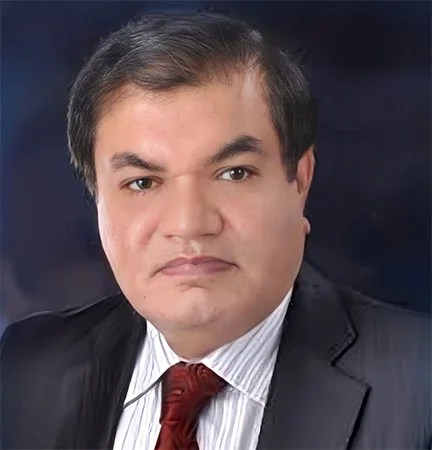
Mr. Hussain said our logistics costs act as a tax on exports. Without fixing modal imbalances, port inefficiencies, and fragmentation, export growth will stay limited, risking Pakistan’s global supply chain role. The logistics sector contributes 15.6% to Pakistan’s GDP, nearly double the 8–9% average for advanced economies, highlighting inefficiencies and high costs.
Mian Zahid Hussain noted Pakistan was excluded from the World Bank’s 2023 Logistics Performance Index due to poor data and weak stakeholder engagement, affecting investor confidence. Most cargo (94%) moves by road, raising costs and causing road damage from axle load violations. Karachi and Port Qasim operate below 45% capacity, with container dwell times of 4–6 days, longer than India’s 2.5–3 and Vietnam’s 1–2 days. Gwadar Port sees minimal use, at 0.36% in FY25.
Mian Zahid Hussain stated Logistics oversight is split across several federal ministries, hindering unified policy. He called for a National Logistics Authority or Ministry to unify oversight, improve coordination, and reduce road freight from 94% to 50% by developing rail freight corridors and modernizing Pakistan Railways.
Mian Zahid Hussain urged granting formal industry status to trucking for better financing and fleet upgrades. He called for expanded warehousing and cold storage near ports to reduce 30–40% post-harvest losses. Incentives for vessel handling at Gwadar Port were recommended to maximize its strategic role and diversify within the BRI. He believes targeted investments and reforms can cut logistics costs and boost Pakistan’s export competitiveness.
Cement despatches rise 16.25% amid strong domestic demand
According to the data released by All Pakistan Cement Manufacturers Association (APCMA), total cement despatches (domestic and exports)during the first quarter of current fiscal year, were 12.161 million tons that is 16.25% higher than 10.461 million tons despatched during the corresponding period of last fiscal year. Domestic despatches during this period were 9.573 million tons against 8.319 million tons during same period last year showing an increase of 15.08%. Export despatches were 20.81% plus as the volumes increased to 2.589 million tons during the first quarter of current fiscal year compared to 2.143 million tons exports done during same period of last fiscal year.
After experiencing 31.24% month over month (m.o.m.) growth in July 2025 and 13.47% in August 2025, cement despatches showed a 7.05% growth in September 2025. Total Cement despatches during September 2025 were 4.250 million tons against 3.970 million tons despatched during the same month of last fiscal year.
Local cement despatches by the industry during the month of September 2025 were 3.418 million tons compared to 2.988 million tons in September 2024, showing an increase of 14.38%. Exports despatches, on the contrary, declined by 15.25% as the volumes reduced from 981,646 tons in September 2024 to 831,966 tons in September 2025.
In September 2025, North based cement mills despatched 3.162 million tons cement showing an increase of 16.41% against 2.717 million tons despatches in September 2024. South based mills despatched 1.09 million tons cement during September 2025 that was 13.23% less compared to the despatches of 1.253 million tons during September 2024.
North based cement mills despatched 2.941 million tons cement in domestic markets in September 2025 showing an increase of 17.02% against 2.513 million tons despatches in September 2024. South based mills despatched 476,465 tons cement in local markets during September 2025 that was mere 0.41% more compared to the despatches of 474,528 tons during September 2024.
Exports from North based mills increased by 8.84% as the quantities increased from 203,280 tons in September 2024 to 221,252 tons in September 2025. Exports from South reduced by 21.54% to 610,714 tons in September 2025 from 778,366 tons during the same month last year.
North based Mills despatched 8.010 million tons cement domestically during the first three months of current fiscal year showing an increase of 13.65% than cement despatches of7.048 million tons during July-September 2024. Exports from North increased by 30.49% percent to 661,866 tons during July-September 2025 compared with 507,201 tons exported during the same period last year. Total despatches by North based Mills increased by 14.78% to 8.672 million tons during first three months of current financial year from 7.555 million tons during same period of last financial year.
Domestic despatches by South based Mills during July-September 2025 were 1.562 million tons showing an increase of 22.99% over 1.270 million tons cement despatched during the same period of last fiscal year. Exports from South increased by 17.80% to 1.926 million tons during July-September 2025 compared with 1.636 million tons exported during the same period last year. Total despatches by South based Mills increased by 20.07% to 3.489 million tons during first three months of current financial year from 2.906 million tons during same period of last financial year.
A spokesman of All Pakistan Cement Manufacturers Association mentioned that we can achieve even better growth provided the government gives concessions on duties and taxes that will ultimately benefit the end consumer. Significant rehabilitation works are to be done due to the devastating floods and we expect co-operation from government, he added.
Mian Zahid warns rising poverty demands bold structural reforms
Mian Zahid Hussain, President Pakistan Businessmen and Intellectuals Forum & All Karachi Industrial Alliance, Chairman National Business Group Pakistan, Chairman Policy Advisory Board FPCCI, and Former Provincial Minister Information Technology, on October 1 issued a statement regarding The World Bank’s recent report highlights a major setback in poverty reduction, blaming policy failures and the collapse of an unsustainable growth model. Mian Zahid Hussain warned that poverty is expected to rise from 21.9% in 2018–19 to 25.3% by 2024–25, pushing 17 to 18 million more people into poverty.
Pakistan’s economy is structurally fragile, relying heavily on remittances and domestic consumption, which can no longer sustain high-productivity jobs. This weakness makes the 42.7% aspiring middle class, mainly employed informally, highly vulnerable to shocks like inflation, floods, and ongoing macroeconomic instability.
Mian Zahid Hussain warned that a human capital crisis is mortgaging our future. With 40% child stunting and 75% of primary kids struggling to read, the workforce lacks essential skills. High rural poverty compared to urban areas calls for a shift in national policy.
Mian Zahid Hussain emphasized the business community’s commitment to a new development path. He called the World Bank’s advice for bold, people-centered reforms a critical national mandate, highlighting the need for debt management, rationalized spending, and accelerating trade liberalization to boost private sector investment and create quality jobs.
Invest heavily in education, water, and sanitation to end poverty cycles. Mian Zahid Hussain warned against short-term fixes and urged focus on human capital and structural reforms for a resilient future.
Book Reflecting on Regional Turmoil Launched

Former Chairman of the Joint Chiefs of Staff Committee (CJCSC) Gen Ehsanul Haq said there is nothing wrong with our spy agencies it is only that we need to address our internal fault lines.
He was addressing as the chief guest at the launching ceremony of a memoir titled “Caught in the Crossfire: The Inside Story of Pakistan’s Secret Services” by former ISI operative, Brig (R) Naseem Akhtar Khan at Islamabad Club the other day.
“The book provides us a glimpse of those fault lines also. The book would serve as guiding document for the readers giving them a better and broader perspective of the ISI and other secret agencies of the country,” said Gen Ehsan.
It is to be noted that Naseem, the author, has spent more than two decades in the ISI (in total almost four decades (1969-2010) in the armed forces) serving on different important positions and undertaking high profile missions.
Gen Amjad Soaib said ‘Caught in the Crossfire’ is a thoughtful story full of interesting anecdote, reflecting on regional turmoil and its dramatic outbursts that have profoundly shaped not only Pakistan’s national stability but also the broader global security outlook.
“My time in ISI coincided with historic developments in security paradigm. Among those developments were Russian Invasion of Afghanistan (1979 to 1989), the Afghan civil war (1992-2001), and the aftermath of 9/11 which completely altered international security norms, particularly in South East Asia,” said the author.
Former Air Chief Marshal (ACM) Abbas Khattak, former DG ISI Lt Gen (R) Asad Durrani, former Director Military Operations and noted defence analyst Lt Gen (R) Amjad Shoaib, leader of the Pakistan People’s Party, former Senator Farhat Ullah Babar, Amb (R) Salahuddin, former Member of the Provincial Assembly (MPA) Balochistan Assembly and President of the PML-Q Women WingAmna Khanam were among the noted guests.
The book is published by Pen & Sword Books (UK) and marketed by Casemate Publishers (USA) while it is also available on Amazon.com.
In Pakistan, it has been reprinted by Vanguard Books and is available at all leading bookstores.
BankIslami and NCCPL Join Hands to Expand Islamic Finance in Pakistan’s Capital Market


BankIslami has signed a Memorandum of Understanding (MoU) with the National Clearing Company of Pakistan Limited (NCCPL) to strengthen the presence of Islamic finance in the country’s capital markets. This collaboration aims to introduce innovative, Shariah-compliant financial solutions, creating new opportunities for investors seeking Riba-free financial solutions.
This partnership combines BankIslami’s expertise in Islamic finance with NCCPL’s technological and infrastructural capabilities. The MOU was signed during a signing ceremony held at BankIslami’s headquarters in Karachi, in the presence of senior representatives from both entities.
Speaking on the occasion, Rizwan Ata, President and CEO of BankIslami, said: “Through this partnership, we take a step towards making Pakistan’s capital markets more accessible by offering robust, interest-free financial solutions. Our objective is to encourage wider participation and create greater investment opportunities for all.”
Naveed Qazi, CEO of NCCPL, commented: “Our collaboration with BankIslami marks a step forward in advancing Shariah-compliant solutions within Pakistan’s capital market. We are confident this collaboration will create opportunities for greater accessibility, inclusivity, and investor trust.”
The MoU will benefit a wide range of customers, looking for Shariah-compliant investment avenues. Customers will gain access to Islamic financial instruments such as equities and debt securities through a strong and trusted platform. For NCCPL, the partnership enables further expansion of its infrastructure while aligning with Islamic financial principles.
Aligned with its mission of Saving Humanity from Riba, BankIslami will continue to work closely with NCCPL to deliver practical solutions that support the long-term growth of the financial sector and strengthen the role of Islamic finance in Pakistan.
A blueprint to accelerate digital payments adoption and usage of Pakistan’s instant payment system

The Better Than Cash Alliance today released a report presenting a practical blueprint for responsible pricing to scale merchant payments on RAAST, Pakistan’s instant payment system.
The report supports policymakers and providers in designing merchant solutions for small businesses and long-term ecosystem viability at the right price point to support the attainment of the State Bank of Pakistan’s digital financial inclusion goals.
Despite progress in digital finance, cash still dominates Pakistan’s economy, costing the country trillions of rupees each year in lost tax revenue, cash handling, and idle liquidity. The new RAAST pricing blueprint outlines how to scale merchant (person-to-merchant, or P2M) payments by uniting policymakers and providers behind a sustainable, affordable model that works for micro and small businesses.
The recommendations emphasize responsible, cost-based pricing, combined with early adoption incentives and 24/7 recourse to build trust in digital transactions. To sustain momentum, the report proposes creating a National Merchant Payments Working Group to coordinate data-driven reviews, financial literacy initiatives, and merchant education.
Recognizing RAAST as a national public good, the report reflects the State Bank’s emphasis on responsible pricing as policy – avoiding zero-pricing distortions, and pairing affordability with market viability and reliability.
Saleem Ullah, the Deputy Governor, State Bank of Pakistan, during his speech, said, “RAAST is a national digital public infrastructure and the pivot of our digitization efforts. The ultimate goal is to win the war against cash and that can only be achieved through partnerships and collaborations. We are pairing early incentives for merchants with a responsible, sustainable pricing approach keeping acceptance affordable while enabling banks, fintechs, EMIs, PSOs, and PSPs to keep on investing in the ecosystem. With strong consumer protection and fair competition, we will scale person-to-merchant payments in a way that builds trust and inclusion.
The Alliance underscores that adoption will hinge on merchant trust and usability, not price alone. Consistent with the UN Principles for Responsible Digital Payments, the blueprint prioritizes features that meet merchants where they are, especially micro and women-led businesses: predictable low pricing, instant confirmations, reliable recourse, and low-bandwidth options.
L. Nshuti Mbabazi, Managing Director, Better Than Cash Alliance, said, “I thank RAAST for prioritizing the needs of micro and small businesses in Pakistan first to design responsible solutions to serve them. This is an exemplary step in enacting the UN Principles for Responsible Digital Payments, especially Principle 5. By building ‘end-to-end digital payment experiences that benefit every citizen/resident of Pakistan, and ensuring you make recourse clear, quick, and responsive, I do not doubt that the ambition you have set out to be an economy where digital payments are better than cash can be attained in no time. With responsible RAAST pricing and fully transparent communication -‘particularly on pricing’ – your people can turn everyday transactions into confidence, growth, and inclusion.”
The report situates RAAST within Pakistan’s National Financial Inclusion Strategy (NFIS) and the State Bank of Pakistan’s National Payment Systems Strategy (NPSS), recognizing it as core national digital public infrastructure.
Key findings from the report
- Responsible pricing as policy: A 0.35% Merchant Discount Rate (MDR) floor, with sector-specific adjustments and no issuer interchange, ensures provider viability while keeping merchant costs low. This avoids a “race to the bottom” and enables investment in acquisition, reliability, and service quality.
- Early-stage incentives: Time-bound incentives (e.g., micro-transaction zero fees, cashback/tax relief) can drive habit formation and initial acceptance among micro and women-led merchants, paired with clear messaging that P2M is distinct from P2P.
- Governance that learns: A National Merchant Payments Working Group is recommended to oversee dynamic reviews and ecosystem coordination.
- Beyond pricing: Trust and inclusion matter, 24/7 dispute resolution, gender-intentional onboarding, and Unstructured Supplementary Service Data (USSD)/ Near Field Communication (NFC) options for low-connectivity areas are essential for scale.